martes, 23 de mayo de 2017

BABY LED WEANING (BLW)

What is it?
Baby-led weaning is an approach to introducing solid food where baby is allowed and encouraged to self-feed solid finger foods instead of receiving purées via spoon. 
BLW babies:
  • Are encouraged to join the family at mealtime and self-feed appropriate finger foods.
  • Choose what, how much, and how quickly to eat.
  • Are given the freedom to explore new tastes and textures without the pressure to eat a set amount or a specific food.
  • Continue to nurse (or baby's bottle) just as often. Solids are to compliment milk, and baby is trusted to know when to increase solid feedings and decrease milk.

When is the baby ready?
Experts agree that solids should be delayed until the middle of the first year of life. This is when baby’s digestive system is mature. Some babies may seem ready at 5 ½ months, while others may not be ready until 8 months of age. 
Signs of readiness include:
  • Baby can sit up well without support.
  • Baby has lost the tongue-thrust reflex.
  • Baby has developed the fine motor skills to self feed. 
  • Baby is willing to chew, even if he has few or no teeth.
  • Baby shows interest in participating at mealtime, and may try to grab food from your plate and put it in his mouth.

What are the benefits of baby led feeding?

  • It’s easier.
    • Purées are time consuming. It’s much easier to adjust what the adults are eating to suit baby.
    • BLW babies aren’t pressured into eating. They are trusted to know when, what, and how much they need to eat. Therefore, there is less stress and everyone can enjoy mealtime. 
    • Babies feed themselves, so you can eat at the same time.
  • Baby develops good eating habits.
    • Baby learns self regulation.
    • Self selection of food has even been shown to increase weight in underweight babies, therefore supporting a healthy weight in most babies.
    • Since BLW babies experience a wide range of healthy foods early on, they may be more likely to continue to enjoy those foods later in life.
  • It’s educational.
    • Babies learn to safely handle food (they learn to chew THEN swallow)
    • Babies learn to manage different textures, tastes, sizes, and shapes of food.
    • Babies get lots of hand eye and fine motor practice by learning to grasp food and move it to their mouth.
    • Babies learn best by observing and copying. Eating meals together gives her many opportunities to learn about food.

Tips.

  • Hunger can create an unhappy experience for everyone. Be sure to nurse or bottle feed baby up to an hour before offering solids so that his tummy isn’t empty.
  • Forget about expectations and let it be a learning experience. Baby probably won’t eat much at first.
  • Realize that it may be a slow process. Babies can take a longer time when they’re in charge. As they get the hang of it, feeding time will be quicker.
  • It will be messy. Many parents find a naked baby is easiest to clean up afterwards.
  • Don’t serve small pieces of food but instead serve pieces of food large enough for baby to grasp easily. Some families find cutting food with a crinkle cutter or rolling pieces of food in oat flour can make pieces easier for baby to hold.
  • If food can be smashed between your finger and thumb, it’s probably appropriate for baby.
  • Don’t put more than a few pieces of food on the highchair tray or table at once, so baby won’t get overwhelmed.


SEPARATION ANXIETY.

What is it?


Separation anxiety is a condition in which a child becomes fearful and nervous when they're away from home or separated from a loved one usually a parent or other caregiver to whom the child is attached. 


Symtons:
  • An unrealistic and lasting worry that something bad will happen to the parent or caregiver if the child leaves.
  • An unrealistic and lasting worry that something bad will happen to the child if he or she leaves the caregiver.
  • Refusal to go to school in order to stay with the caregiver.
  • Refusal to go to sleep without the caregiver being nearby or to sleep away from home.
  • Fear of being alone.
  • Nightmares about being separated.
  • Bed wetting.
  • Complaints of physical symptoms, such as headaches and stomachaches, on school days.
  • Repeated tantrums.
Treatment:
No treatment is required for separation anxiety.
Parents can help their kid adjust to their absence by letting trusted caregivers take care of the child. This helps the child learn to trust and bond with other adults and understand that their parents will return.
During medical procedures, a parent should be with the child when possible. When a parent can't  go with the child, exposing the child to the situation previously may be helpful, such as visiting the doctor's office prior to an examination. 
When it is not possible for the parents to be with the child, such as during surgery, explain the experiences to the child. Reassure the child that one of your parents is waiting for you, and where. 
For older children who have not overcome separation anxiety, treatments may include:
  • Anti-anxiety drugs.
  • Changes in parenting techniques.
  • Counseling for parents and child.
Treatment for severe cases may include:
  • Family Education.
  • Family therapy.
  • Psychotherapy.

Strategies.
First of all, you have to prepare your child:
  • Visit the new early-childhood service with your child before they start.
  • The first days, let the child go just 30 minutes, the second day 60 and progressively.
  • Talk to your child about what will happen when they go to the service, tell them you will be back, and talk about what you can do when you see each other again.

Secondly, you've to work together with the educator:
  • Inform them about what is happening in your home that might affect how your child is feeling.

Thirdly, you have to build trust:
  • Make sure you say goodbye to your child and let them know when you will be back. Try to keep the 'goodbye' short, as lengthy goodbyes can make children more upset. 
  • Don't ignore your child's distress – respond and comfort them. The important thing is to find a balance between supporting your child and giving them the chance to get experience managing how they feel.

Fourthly, you've to build feelings of safety.
  • Try to be as calm as possible. If you are calm, your child will feel more secure. 
  • Start playing a game or doing an activity that your child likes with them before leaving. 
  • Build a regular routine around drop-off and pick-up so your child feels secure and is able to predict when you will come back. 

Finally, you've to reconnect:
  • When you pick up your child, spend extra time with them to reconnect again.
  • Bring a favourite toy or a photo from home to help give your child a feeling of security and familiarity.
  • Talk with your child about their day and what they enjoyed.
SENSORY PLAY

*WHY SENSORY PLAY IS IMPORTANT?

Sensory play is important for young children, it gives them endless ways to develop and learn. 
All types of play are essential for children’s development and early learning. Play helps children to develop and improve their gross and fine motor skills, co-ordination and concentration. Also how to work cooperatively and collaboratively, use all their senses to discover and explore their environment, and develop their imagination, creative thinking and ability to problem solve and experiment with solutions.

So, for this reason, we're going to give you some examples of how to work through this kind of activities:

1-DIY galaxy slime.
With this activity, children can develop:
  • Their creativity.
  • Hand-eye coordination.
  • Experiment through all the senses.
  • Patience.
  • They can experiment with the different qualities of the slime.
  • Learn different colours.
  • Learn quantities.

2-Mixing primary colours.
We have 3 different glasses, full with water and colours colorant
We'll make a bridge between the glasses with a serviette, so children can see the change of colour.
With this activity children can:
  • Dintinguish between primary and secondary colours.
  • Develop cognitive skills.
  • Learn the colours.
  • Stimulate their creativity.

3-Color sorting sensory bag.
With this activity children can develop:
  • Hand-eye coordination.
  • Cognitive skills.
  • Learn the colours.
  • Patience.
  • Sizes.
  • Figures.


4-Making bubbles.
With this activity, children can:
  • Hand-eye coordination.
  • New textures.
  • New fragant smells.
  • How to transfer.
  • Temperatures.
  • We can add colorants and show him different colours.
  • New properties.


5-Soapy sensory jar.
  • Fill a peanut butter jar (or other large plastic jar) half-way with water. Add food coloring of your choice.
  • Add some dish soap. Lots if you want lots of bubbles!
  • Add glitter in too if you’d like some sparkles.
  • Then put on the lid. 


With this activity, children can develop/learn:
  • Weights.
  • Colours.
  • Sizes.
  • Fine motor skills.
  • Textures (glass, plastic...)


SPECIAL NEEDS.


Definition: 
"Referring to children who have learning problems or disabilities that make it harder for them to learn than most children of the same age. Many children will have special needs of some kind at some time during their education."

Types of special needs:
  • Behavioural, emotional and social Development Needs.
    • ADHD
    • Emotional Behavioural Disorder (EBD)
    • Oppositional Defiant Disorder
    • Disruptive Behaviour Disorder
    • Attachment Disorder
    • Temper Tantrums
    • Obsessive Compulsive Disorder
  • Cognition & Learning.
    • Specific Learning Difficulty (SpLD) – Dyslexia, Dyscalculia, Dyspraxia
    • Moderate Learning Difficulty (MLD) – numeracy and literacy, speech or language delay, low self-esteem or concentration or under developed social skills.
    • Severe Learning Difficulty (SLD) – significant intellectual or cognitive impairments. Mobility, communication, perception or co-ordination difficulties.
    • Profound & Multiple Learning Difficulty (PMLD) – physical disabilities or sensory impairment.
  • Communication & Interaction Needs.
    • Speech, Language and Communication Needs (SLCN)
    • Autistic Spectrum Disorder (ASD)
  • Physical & Sensory Needs.
    • Visual Impairment (VI)
    • Hearing Impairment (HI)
    • Multi-Sensory Impairment (MSI)
    • Physical Disability (PD)


Should they be included in the ordinary classroom?
Yes. Children with special need should be included in the ordinary school. Recents studies have shown that there's a benefit not just for children with special need but the rest of them. Children with special educational needs can improve their skills and the rest, can develop attitudes towards respect to difference.

Strategies in the classroom:

*General strategies:
  • Treat them equaly.
  • Have patience.
  • Don't put them always on the spot.
  • Give brief and clear explanations.
  • Explain before the activity what they have to do.
  • Use positive reinforcement.
  • Do activities that motivate them.
  • Do activities to stimulate their senses.
  • Have a person to support them.

Associations in Navarre:
*Creena:


The centre of special educational needs resources of Navarre is an organism that depends on the Education Department. It was created in 1993.
It's a specialized structure of support to the educational system that organize and coordinate the things related to special needs to achieve a better integration in the educational system.


*ANFAS:
It's an asociative movement in Navarra, since 1961. It gives support and defends the rights of people with intelectual or development disabilities.
They work to raise awareness to the society so the community is more inclusive and solidary.


*ANA(Autism Navarre Association):
It's a non-profit association created by a group of parents with autistic kids in 2012, in Pamplona.


martes, 11 de abril de 2017

HABITS

HOW TO CREATE HABITS

For children, it's really important to have routines and habits to have their life organised.
As educators, our labor is to help them to learn and internalize them.
For that reason we want to tell you some tips about how to work them:

  • The sooner you start, the best; this way, he won't have internalized bad habits.
  • We have to follow and schedule to create routines, this way children will internalize this habits 
  • The best way of "teaching" is through the imitation, which consist in being a model for them.
  • Create a calm environment.
  • Be pacient and don't get mad if he doesn't success at first time.
  • If he does it right, we've to praise him and if he fails, encourage him not to give up.


Now, we're going to tell you how to teach some basic habits


EAT ALONE.

*Advices:
  • The materials should be adapted; when they're younger, they sit in a high chair and drink in baby's bottles and when they're older in a child chair and drink with glasses use plastic cutlery and don't give them knifes...
  • Don't leave them alone.
  • Start giving them food that they can eat easily and gradually increase the difficulty.
  • Let them experiment through their senses, get dirty.
  • Be pacient.
  • Don't hurry.
  • Follow and schedule.
  • Take into account the doctor's advice.

*How to create this habit:
  • First of all, we'll explain him the different steps that he'll follow. For example: in first place, we put the dish, then the glass, and finally the cutlery.
  • We'll act as models to teach him how to use the cutlery, at first it'll be difficult for him but with the practice he'll improve.
  • If he doesn't want to it, we don't have to force him.
  • Every child has his own  rhythm, be patient.


DRESS UP:

*Advices:
  • Easy to wear; without buttons, zips, wide and elastic clothes.
  • Be patient.
  • Don't teach this habit in a boring way, instead you can teach it like a game.
  • Start from the easiest ones to put on and progresive, the most difficult ones.
  • Use shoes with velcro instead of shoelaces.
  • Use socks without heel.
  • Use sweaters with a narrow neck.
  • Establish moments in the day in which the kid has to put on and put off the clothes (when he leaves, when he arrives...)
  • Don't rush.
*How to create this habit:

We're going to focus in the most difficult ones for kids:

  • How to put on a coat:
    • First of all, we put the coat on the floor, with the hood nearest and the coat face up.
    • We introduce the arms into the sleeves.
    • We raise the coat upon our head.
    • Finally, we accomodate it.


  • How to put on a trousers:
    • We pick the trousers with the label nearest to him.
    • We stretch the elastic resistance band.
    • We introduce each leg for each leg hole.
    • We accomodate the trousers.


  • How to put on a t-shirt:
    • We introduce the head into the hole. The label must be in the back.
    • We introduce each arm into the sleeves.
    • We accomodate the t-shirt.


BRUSH THE TEETH:

*Advices:
  • Use an adapted tooth-brush and a children toothpaste.
  • Use a stool so the kid can reach the sink.
  • Be his model.
  • Teach him slowly and clearly.
  • You can use a song to motivate him.
  • Explain him why is it important.

*How to teach this habit:

  • First of all, place yourself in front of the kid.
  • Then, brush your teeth so the kid can copy the movements.
  • Ask him to repeat the actions.
  • If he has done it in a good way, praise him, if he doesn't, encourage him to try again.

Imagen relacionadaHANDS WASHING:

*Advices:

  • Use a stool so the kid can reach the sink.
  • Don't get mad at him if he gets wet.
  • Don't leave him alone.
  • Explain him the importance of washing his hands.

*How to teach this habit:

  • Place yourself behind him.
  • Open the tap.
  • With your hands help him to clean his hands.
  • After that, dry off your hands.
  • Make the child repeat but this time alone.


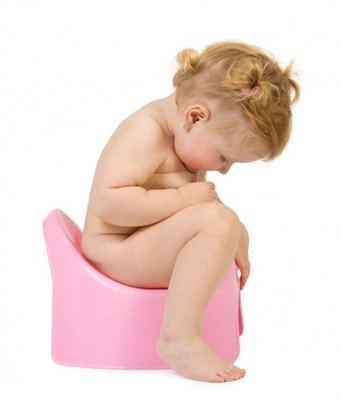
Resultado de imagen de niños en el orinal


BYE NAPPIES:

*Advices:

  • Use an adapted toile
  • Follow and schedule.
  • Every child has his own  rhythm, don't force him if he's not ready.
  • Don't get angry if at first he doesn't tell you that he needs to go to the bathroom.
  • Be patient.
  • Explain him the importance of making pee and poo
  • You can use a song to motivate him.
  • Don't teach this habit in a boring way, instead you can teach it like a game.
*How to teach this habit:
  • Show him were is located the potty.
  • We'll explain him the different steps that he'll follow. For example: First of all the child has to take down the trourses and the underwear then she has to sit down on the potty and finally wait until she wants to make pee.
  • We'll act as models to teach him how to use the potty.
  • If she doesn't want to do it we don't have to force him .


Hope you find this tips useful and practical.


miércoles, 30 de noviembre de 2016

SYMBOLIC PLAY: IT IS IMPORTANT?
  
What is that? 
Simbolic play, is a type of play in which the child acts as if he was another person in a different place, doing things that he couldn't do in everyday life. For example: being a pirate.


Why is important?
  • It allows children to put themselves in another point of view.
  • Development of empathy. 
  • Improve language.
  • Improve social skills.
  • Develops imagination and creativity.
  • Allows children to solve problems by their own.
  • Is useful to overcome fears. 
  • Improves motor skills. 

What can we do:
  • Be a model.
  • Tell them stories.
  • Play with them.
  • Give them accurate materials. 
  • Let them play freely.

In short, we think that symbolic game plays an important role on children's development and we should encourage it. 

martes, 29 de noviembre de 2016

OUR TEACHING METHOD


As educators, we would follow some methodologies. For example:

  • Bandura: we'll be the models that children have to follow, and for that, we have to teach them with our example.
  • Maria Montessori: we'll adapt the materials and things in the class according to their age, we will let them explore and learn by themselves.